Akhmatova on Looking Back

Anna Akhmatova

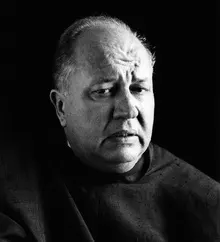
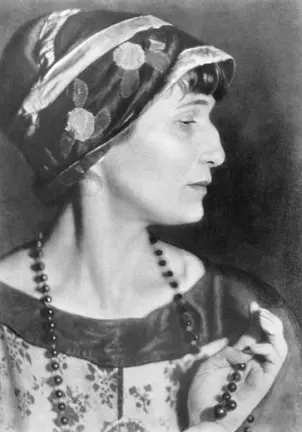
Anna Akhmatova (1889-1966) was a Russian poet who grew up in St. Petersburg. She married fellow Acmeist poet Nikolai Gumilev in 1910. Ambivalence on both ends led to divorce in 1918, right as Russia was on the brink of a major revolution. Gumilev was executed shortly thereafter. Rather than emigrate, Akhmatova, though impoverished and isolated, made the bold decision to remain in Russia—as a witness to the atrocities. During this time, she endured Stalin’s Great Purges and the ramifications of the World Wars. Many of her friends and loved ones were imprisoned or exiled. Due to suppression, she published little to nothing from 1925-1935. Lot’s Wife was written sometime between 1922-1924, after the revolution and just prior to her ten-year “silent period”.

Lot’s Wife (translated by Stanley Kunitz)

And the just man trailed God’s shining agent,
over a black mountain, in his giant track,
while a restless voice kept harrying his woman:
“It’s not too late, you can still look back

at the red towers of your native Sodom,
the square where once you sang, the spinning-shed,
at the empty windows set in the tall house
where sons and daughters blessed your marriage-bed.”

A single glance: a sudden dart of pain
stitching her eyes before she made a sound…
Her body flaked into transparent salt,
and her swift legs rooted to the ground.

Who will grieve for this woman? Does she not seem
too insignificant for our concern?
Yet in my heart I never will deny her,
who suffered death because she chose to turn.

Response Poem

A response poem is any poem that directly responds to another work of literature (not to be confused with ekphrastic poetry, which is poetry that responds to non-literary art). Responses can range from a reply to a disagreement to an outsider’s opinion. What matters most is that the response poem engages another work of literature in a meaningful way.

The Biblical Account of Lot’s Wife

According the bible, Lot was informed that God was going burn his native city Sodom and all of its people to the ground. He was given instructions by two angels to flee the city with his family and to never look back. However, when his wife looked back, she was punished by being turned into a pillar of salt.

Akhmatova’s Response

Akhmatova opens the poem by dramatizing the punishment of Lot’s wife and adding details not present in the biblical account. Notice how Akhmatova emphasizes Lot’s wife’s sentimental attachments to Sodom when a voice beckons her to look back at “the square where you once sang, the spinning-shed,/ at the empty windows set in the tall house/ where sons and daughters blessed your marriage bed.” Akhmatova is drawing a parallel between Lot’s wife and herself.

In Lot’s wife’s decision to look back at the ravaged Sodom, Akhmatova sees her own decision to look back on her beloved St. Petersburg, whose culture and vitality was similarly ravaged by the Great Purges. Her identification with Lot’s wife is solidified in the final two lines: “Yet in my heart I never will deny her,/ who suffered death because she chose to turn.” Thus, the story of Lot’s wife becomes, by extension, a convenient and meaningful way for Akhmatova to defend her decision to remain in Soviet Russia, despite its immediate dangers.

Challenge Prompt

Find a poem that you think you can respond to. Pick a work of literature that you agree with; or conversely, pick one you disagree with. Pick one that sets out to be serious but which you happen to find ridiculous. Pick one that is written as a request and write a reply to it. There is a lot of room for creativity here.

Tip: Whatever you do, engage the work you choose in a meaningful way. In, don’t simply rewrite the work in your own words.

Practice Verse

writing-828911_960_720

Did you miss this week’s challenge? Click Here.

Here are some excerpts of the scrap verse I produced in iambic pentameter. It’s important to remember that—practice is practice. Even so, it can be difficult to silence one’s internal judges. Just bear in mind that the practicing poet should always strive to improve, not to impress.

A murk-doomed day, its fleet of astral smog,
its subterranean earthworm exposed.
The cigarette, unashed, burnt to her lips,
and lit the fuse that burst within her breast.
The void was such a gentle place to be
in harsher times, the rose had three regrets.
All smothered in a business suit, the boy
outbet the men, like stars outburn the sun.
I’m seeing where I don’t belong, and why.
Behold the hour, no sweeter than its year,
at which we trash our calendars and clocks.

He holds his fate between his lips and smiles.
She fought a bird beneath a broken sky.
The wheel of doubt has struck me down again.
I turned the wheels inside her circus mind.
Those wheels burned against the painted clowns.
Sunk in a doom of birds, who won’t rejoice?
Tonight the stars say grace, and fall to snow.

We wore our hoods and slipped beneath the stars.
All sex is measured by its eloquence.
Made in the dark, what do decisions do?
Be serious, the song of you begins.
Be mad as ducks, shred rivers with your wings.
Be someone else, be anyone but me.
Believe in beauty, be the femme fatale.
Be death, transfigured, ghost of the ocean,
the fiery reef of the chief’s sea-tossed wife,
One bullet’s in the barrel of the gun.
The cabin slanted in the winter storm.
The tree picked at its bark with jagged sticks.
The guillotine is strung by tiny thread;
a cat plays with the knot beside the head.
Those eyes of easel grease and glassy ice.
A glistening of thorns broke from those eyes.
I’m melted in a maelstrom of selves,
Make the muck hum, toad of a tickled throat.
The royal skeleton upon his bone.

Have a comment or a poem? Leave it below.

Frost And Natural Rhythm

frost2
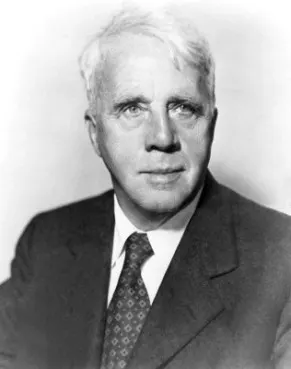
Robert Frost (1874-1963) was an American poet whose work tended to revolve around rural life. Although raised in the city, Frost tried his hand at farming before resigning himself to the post of a teacher/lecturer. Mental illness, often in the form of depression, plagued him and his entire family. Only two of his six children outlived him, and his wife died of complications from breast cancer in 1938. One of the most notable features of Frost’s poetry is his ability to adapt language, as it occurs naturally, to metrical patterns and rhyme schemes. On account of the popularity of some of his poems, Frost was something of a celebrity at the time of his death.

Acquainted with the Night

I have been one acquainted with the night.
I have walked out in rain—and back in rain.
I have outwalked the furthest city light.

I have looked down the saddest city lane.
I have passed by the watchman on his beat
And dropped my eyes, unwilling to explain.

I have stood still and stopped the sound of feet
When far away an interrupted cry
Came over houses from another street,

But not to call me back or say goodbye;
And further still at an unearthly height,
One luminary clock against the sky

Proclaimed the time was neither wrong nor right.
I have been one acquainted with the night.

Iambic Pentameter

Iambic pentameter is a metrical line in poetry that has been used since the beginning of the English language. Many have argued that it is the most naturally-occurring meter in the English language, and several famous epic poems have employed it. Pentameter refers to the 5 feet that occur in the line. In poetry, a foot is a term used to delineate the units of rhythm in every line. Iambic refers to the type of foot that is being used: An iamb is a unit of rhythm with one unaccented syllable followed by an accented syllable. In the first line from Frost’s poem reproduced below, I have separated the five feet with vertical bars and marked the accented syllables with underscores.

I – have | been – one | ac – quain | ted – with | the – night.

The line should have a galloping rhythm that sounds like da-DA-da-DA-da-DA-da-DA-da-DA. When forced, such a line may sound wooden and strained. However, when executed skilfully, iambic pentameter can have a very natural grace. Take the lines, “I have stood still and stopped the sound of feet/ When far away an interrupted cry/ Came over houses from another street.” Here Frost sounds quite conversational. Though in fact, each of these lines is written in near-perfect iambic pentameter.

Challenge Prompt

First, try writing 25-50 individual lines in iambic pentameter, just to get a feel for it. If you’re still feeling up to the challenge, try writing a complete poem in iambic pentameter. It should be stressed (to your relief) that accents can be ambiguous; thus, each foot has some flexibility. Finally, if ever it feels more natural to have the accent come first instead of second in any of of your metrical feet, feel free to play with that option.

Tip: Start by just reciting the galloping rhythm without any words. Then slowly start applying words to it, even if they don’t make sense at first. Eventually, iambic pentameter sentences will be rolling off your tongue. You might even discover that it has been occurring in your natural speech patterns all along.

The Dark Side Of Dawn

SAM_0560

Did you miss this week’s challenge? Click Here.

This is my villanelle for the week.

The Dark Side Of Dawn

I saw the stars expire in light of dawn.
Each bulb plucked from the sky as if by thieves.
I sought my lover’s eyes, but they were gone.

We drew a fleece over the dew-faced lawn
and laid until the sun had blazed the leaves.
I saw the stars expire in light of dawn.

A beacon forms the far east horizon
to prove the evening sly: The view deceives.
I sought my lover’s eyes, but they were gone.

We’d traced the constellation of a swan
and trimmed it out, and swung it from the eaves.
I saw the stars expire in light of dawn.

The widow wakes her bones without a yawn,
then steals into the grave in which she grieves.
I sought my lover’s eyes, but they were gone.

We dreamt in peace, like prophylactic pawns
the king has killed. One does what one believes.
I saw the stars expire in light of dawn.

The morning’s queen of all the land whereon
night set to fleeing Satan’s feet, not Eve’s.
I saw the stars expire in light of dawn.
I sought my lover’s eyes, but they were gone.


What did you come up with? Leave a poem or a comment below.

The Lowly Worm Climbs Up A Winding Stair

Theodore_Roethke

Theodore Roethke (1908-1963) was one of the most influential American poets of the 20th century. Roethke grew up around a large greenhouse facility, his father and uncle’s business. As a result, his poetry demonstrates a keen intimacy with the natural world. When Roethke was fourteen, his father died of cancer and his uncle committed suicide. Roethke was further plagued by manic depression and occassional psychotic episodes. And to compound these issues, he picked up a drinking habit in college. However, Roethke remained a prolific poet and a passionate teacher beloved by his students all his life. He died of a heart attack in a friend’s swimming pool.

The Waking

I wake to sleep, and take my waking slow.
I feel my fate in what I cannot fear.
I learn by going where I have to go.

We think by feeling. What is there to know?
I hear my being dance from ear to ear.
I wake to sleep, and take my waking slow.

Of those so close beside me, which are you?
God bless the Ground! I shall walk softly there,
And learn by going where I have to go.

Light takes the Tree; but who can tell us how?
The lowly worm climbs up a winding stair;
I wake to sleep, and take my waking slow.

Great Nature has another thing to do
To you and me; so take the lively air,
And, lovely, learn by going where to go.

This shaking keeps me steady. I should know.
What falls away is always. And is near.
I wake to sleep, and take my waking slow.
I learn by going where I have to go.

The Villanelle

A villanelle is a poetic form using two refrains which recur throughout the poem, first alternately, and then as a couplet.

Look at the breakdown of the villanelle below. Lines A1 and A2 represent the two refrains that are going to recur throughout the form. They appear offset in the first stanza, alternate as the third line of successive stanzas, and form a couplet in the final stanza. The lower case a’s and b’s adhere to the rhyme scheme but are not refrains.

Villanelles are typically written in iambic pentameter, meaning each line has 10 syllables with the accent falling on every other syllable. They are also typically rhymed in an “a-b-a” rhyme scheme. However, these rules are flexible, and even refrains can be varied, as Roethke demonstrates with line A2. Roethke changes it to “And learn by going where to go” in the third stanza, and then to “And, lovely, learn by going where to go” in the fifth stanza. This allows him to maintain a more natural voice and to add a pleasant variation to his refrains.

Notice how the two refrains, taken in and of themselves, are not very specific or spectacular. However, their vagueness grants them a broader range of flexibility within the context of the preceding lines. Don’t be afraid to be a little obtuse when writing your refrains. Lastly, a villanelle needn’t be lyrical, but it’s worth noting how aptly Roethke has fixed his lyrical style to this form. And how he uses the refrains to build up whatever emotion he may be trying to evoke.

Breakdown of the Villanelle

A1 – I wake to sleep, and take my waking slow.
b – I feel my fate in what I cannot fear.
A2 – I learn by going where I have to go.

a – We think by feeling. What is there to know?
b – I hear my being dance from ear to ear.
A1 – I wake to sleep, and take my waking slow.

a – Of those so close beside me, which are you?
b – God bless the Ground! I shall walk softly there,
A2 – And learn by going where I have to go.

a – Light takes the Tree; but who can tell us how?
b – The lowly worm climbs up a winding stair;
A1 – I wake to sleep, and take my waking slow.

a – Great Nature has another thing to do
b – To you and me; so take the lively air,
A2 – And, lovely, learn by going where to go.

a – This shaking keeps me steady. I should know.
b – What falls away is always. And is near.
A1 – I wake to sleep, and take my waking slow.
A2 – I learn by going where I have to go.

Challenge Prompt

Write a poem using the villanelle form. Remember, as stated above, that there is plenty of room for experimentation and variation within this form. Limitations, such as form, can give your poem structure, but beware that too much limitation can oppress your voice. The meter needn’t be iambic pentameter. The rhymes can be slanted, or discarded altogether. The refrains can be altered, or rearranged. You might set out to write a poem in a traditional form like the villanelle only to find that it just doesn’t fit. If so, never hesitate to scrap that form and arrange your poem in a different form, in free verse, or even in prose.

Tip: Try writing your two refrains first (your poem is now almost halfway complete!). Make them count, and then build the rest of the poem around them. You can alter them as you go if necessary.

The Landlord At The Door

doorknock

Did you miss this week’s challenge? Click Here.

Here is my paralipsis poem for the week:

The Landlord At The Door

It’s not because of charcoal scarred into
the carpet, after hurling a hookah, sparks and all,
down a flight of stairs. It’s not because
local drunks know the two-car garage doubles
as an open bar. No noteworthy crime was ever
reflected in that bathroom mirror. Not one
vagabond has danced these floors with
the filth of brothels on her boots. There are no
squatter’s here; everyone’s accounted for.
It’s not that anything is wrong with any of the
appliances: The dishwasher isn’t kicked in;
the microwave isn’t caked with blood;
the sinks are not clogged with hair, condoms
and cigarette butts. It’s got nothing to do with
garbage bags full of body parts. Nothing

ever goes wrong. Yes, of course, we’d
love to have you in—It’s just these cockroaches,
see? And the exterminators are here
to take care of it. We’re making sure
the whole place gets wiped out.

What did you come up with? Leave a comment or a poem below.

Bukowski Had A Heart?

tumblr_mi7z9bI5MM1qfa8kuo1_500


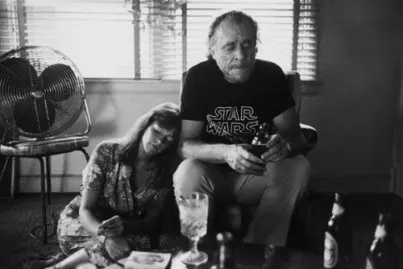
Charles Bukwoski (1920-1994) is perhaps best known for his literary alter-ego, Hank Chinaski. Like Bukowksi, Chinaski lives in the slums of L.A. and struggles to maintain a job. Misanthropic, cynical and incapable of reconciling himself with the world around him, he considers himself mad. He also believes he is a great artist, but his ambitions are compromised by unstable women, binge hangovers, bar fights and general bad luck. Despite being snubbed by critics and scholars, Bukowski’s unabashed self-portrait, combined with his simple and straightforward approach to writing, has earned him a cult following.

Bluebird

there’s a bluebird in my heart that
wants to get out
but I’m too tough for him,
I say, stay in there, I’m not going
to let anybody see
you.
there’s a bluebird in my heart that
wants to get out
but I pour whiskey on him and inhale
cigarette smoke
and the whores and the bartenders
and the grocery clerks
never know that
he’s
in there.

there’s a bluebird in my heart that
wants to get out
but I’m too tough for him,
I say,
stay down, do you want to mess
me up?
you want to screw up the
works?
you want to blow my booksales in
Europe?
there’s a bluebird in my heart that
wants to get out
but I’m too clever, I only let him out
at night sometimes
when everybody’s asleep.
I say, I know that you’re there,
so don’t be
sad.
then I put him back,
but he’s singing a little
in there, I haven’t quite let him
die
and we sleep together like
that
with our
secret pact
and it’s nice enough to
make a man
weep, but I don’t
weep, do
you?

Check out this excellent recitation by actor Harry Dean Stanton

Paralipsis

Paralipsis is a rhetorical device by which a writer emphasizes or draws attention to something by either denying it or refusing to talk about it.

Throughout this poem, the speaker suggests that he’s a tough guy: he drinks and smokes, he doesn’t weep and he doesn’t like the idea that this bluebird could “mess me up.” The bluebird, then, becomes a symbol for the speaker’s inner sensitivity, which he conceals with a tough exterior. The speaker insists he’s “too tough” to reveal that he has a bluebird in his heart and is very careful about not letting people see it. However, the more the speaker denies and conceals the bluebird, the more he ultimately talks about it and reveals it to the reader. Also, notice how toward the end of the poem the speaker seems on the brink of actually revealing his secret: “and it’s nice enough to make a man weep.” Only, he backs out of the confession at the last second: “but I don’t weep, do you?” This adds a final punch to the paralipsis element of the poem since it continues to play with revelation and concealment.

Challenge Prompt

Write a poem that employs paralipsis. Notice how Bukowski repeats, “there’s a blue bird in my heart but I’m too tough for him.” Repetition of a denial or a concealment is common in poems that use paralipsis. Yours might be something along the lines of “I’m not talking about …” or “I refuse to tell the world that…” As you deny or conceal what you’re talking about, be sure to go into detail about it so that you’re slowly revealing it as well.

Tip: as you write this, pretend you’re in a room by yourself, talking to yourself.